The problem
Before a property sale, a notary has to check every party in the file across official registers and sanctions lists, by hand. It is slow, repetitive and high-stakes: one missed match is a compliance failure.
The approach
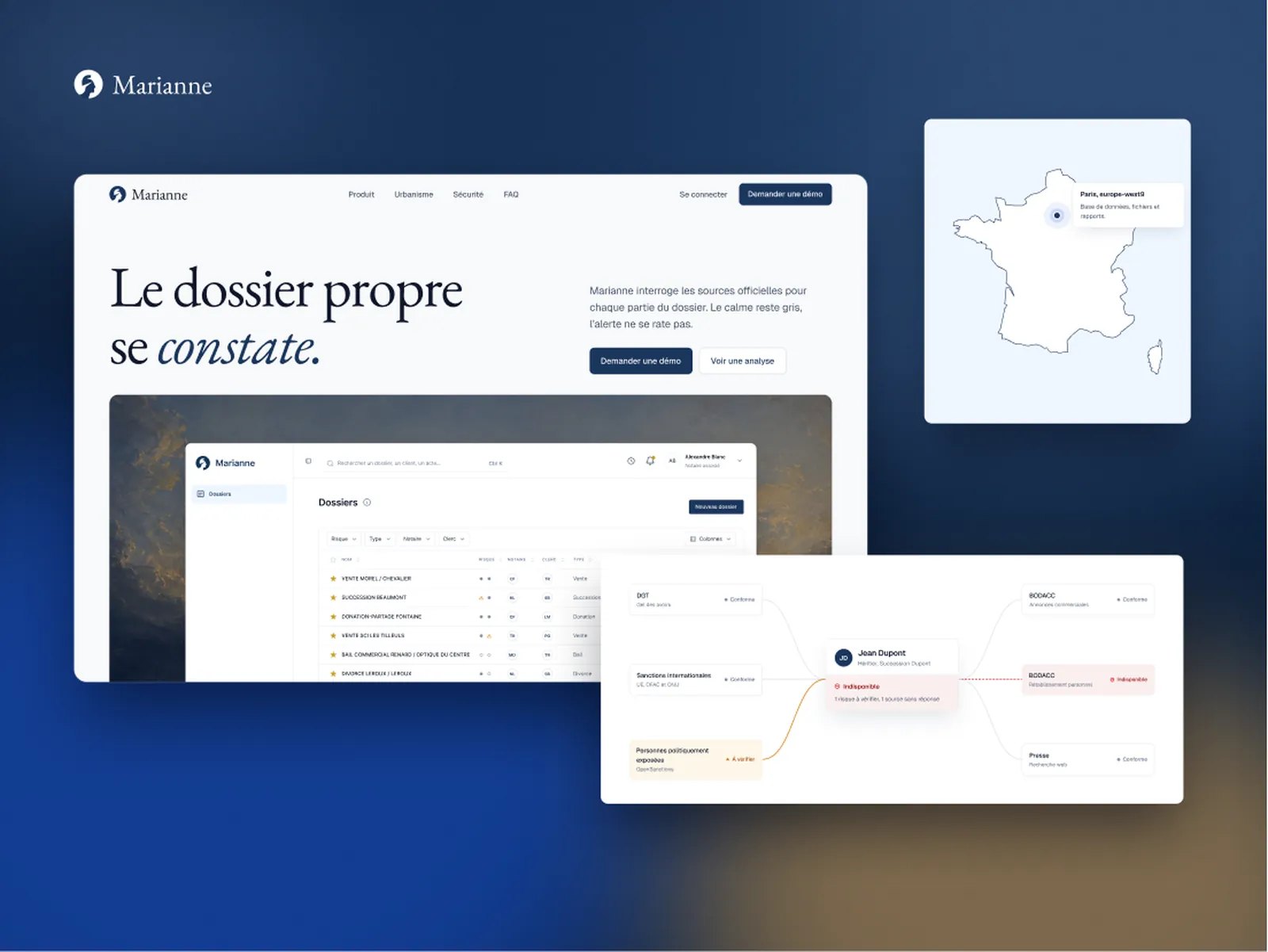
I positioned the product around the notary's real job, which is a decision, not a search. The design runs every check in the background and builds one case view that only surfaces what needs a human decision.
The result
A product designed to turn 15 to 30 minutes of manual checks per party into a single, readable verdict, with the sources one click away. Marianne is launching soon.
Designing for a cautious buyer
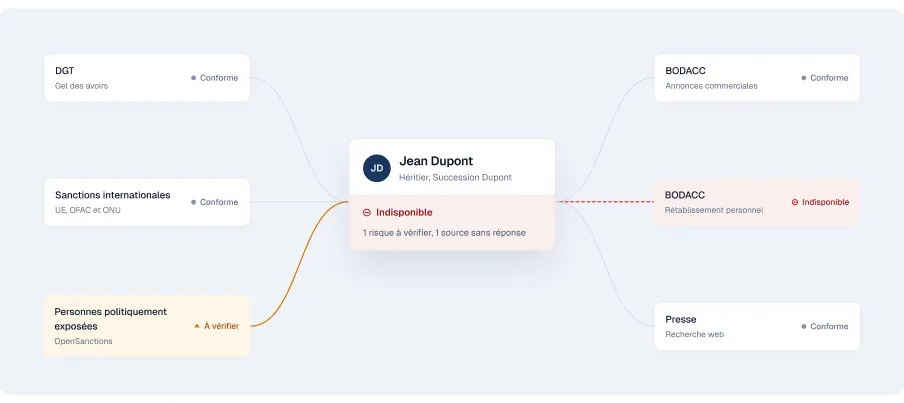
Notaries are careful by profession. A tool that asks them to trust a black box will not get past the first demo. So every verdict in Marianne shows where it came from: which register, which list, when it was checked.
The visual language follows the same idea. Calm, editorial and precise, closer to a well-kept file than to a dashboard full of alerts.
One case view instead of ten tabs
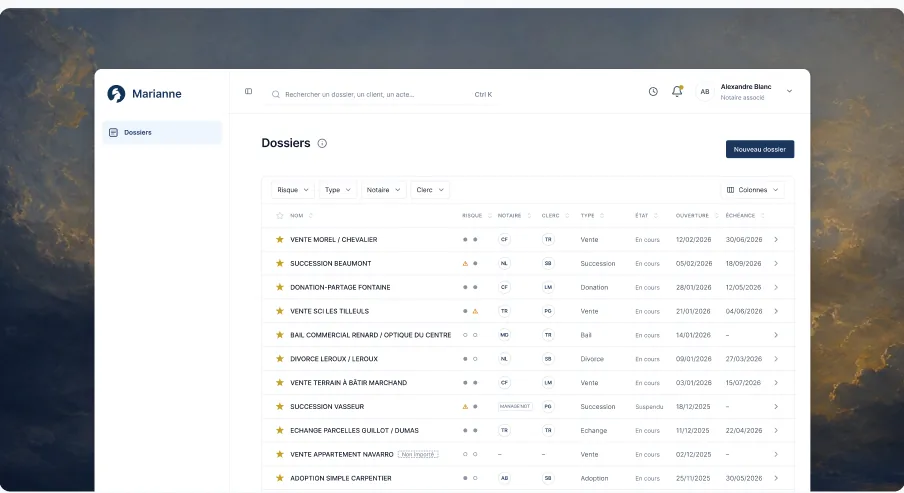
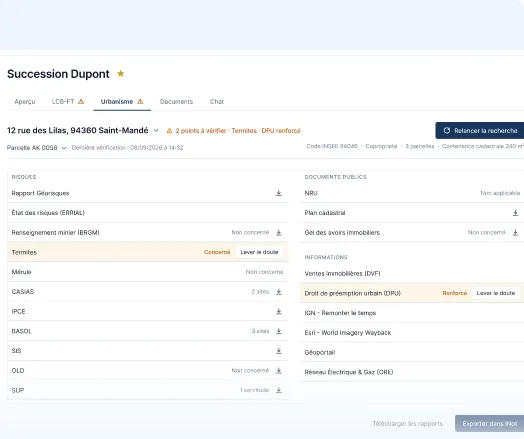
The core of the product is the case view: the parties of a file, the checks run on each one, and a clear status. Anything that needs attention rises to the top. Everything else stays quiet, but available.